Why Use a Ceiling Air Filter?
A Ceiling Air Filter can help capture airborne particles before air moves through a room or returns to an HVAC system. Its value depends on placement, airflow, and the filter’s rated performance. A filter that does not fit its frame can allow air to bypass the media. Small gaps matter.
In rooms with visible dust, busy foot traffic, or shared air circulation, ceiling-mounted filtration may support a cleaner indoor environment. It can also keep some particles from settling on desks, shelves, and equipment. Still, a filter is not magic. It does not replace adequate ventilation, regular cleaning, or attention to moisture and other pollution sources. That distinction is easy to overlook.
ASHRAE filtration expert William P. Bahnfleth’s broader guidance on indoor air quality can be summarized this way: “Filtration works best as part of a complete air-quality strategy, not as a stand-alone fix.” This is a summary, not a verbatim quotation. His work highlights why system design and operation matter alongside filtration.
Before choosing a Ceiling Air Filter, check the equipment specifications, dimensions, and recommended replacement schedule. A filter with greater resistance may affect airflow if the system was not designed for it. Look for a clear rating, confirm that the filter sits securely, and inspect it when conditions warrant. A simple visual check can reveal a loose edge or a loaded surface. The right choice is rarely the most impressive label; it is the filter that fits the system and gets maintained consistently.
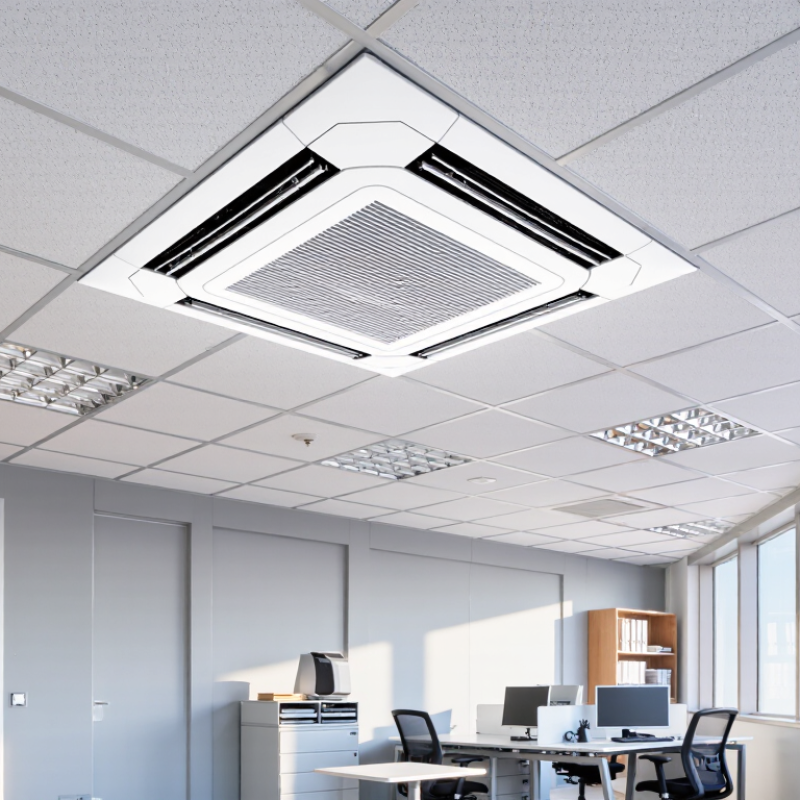
Why Use a Ceiling Air Filter?
A ceiling air filter works best when it matches the room’s airflow, not just its ceiling dimensions. In many homes, a filter sits behind a return-air grille, where it catches particles before air travels back to the HVAC system. Some ceiling units instead draw and recirculate room air independently. The distinction matters. Check which type you have before choosing a filter.
The return grille’s position affects how air moves across the room. A grille near a doorway may pull air along a different path than one above a sofa. Keep supply vents clear, and avoid blocking the filter with tall furniture or curtains. Small details count. A filter that is too restrictive can reduce airflow, so use the size and filtration level recommended for the system. If airflow drops or the HVAC runs longer than usual, check the filter and consult a qualified technician.
Ceiling placement can help keep equipment out of the way, but it does not guarantee even cleaning. Air may bypass a unit in a room with closed doors, awkward corners, or weak circulation. Real rooms vary. After installation, notice whether dust gathers in one area or the room feels stuffy. Replace or clean the filter at the interval indicated for its specific design, and inspect it sooner in dusty conditions. A quick visual check is useful, though it cannot show every airflow problem.
| Dimension | How It Works | Practical Consideration |
|---|---|---|
| Room-air cleaning | A ceiling-mounted filter can capture some airborne particles as room air passes through it. | It only filters air that actually moves through the filter; placement and airflow affect how much room air is treated. |
| Supply-air grille | A filter at a ceiling supply outlet treats air delivered from the HVAC system into the room. | Use only a filter and grille arrangement approved for that system. Added resistance can reduce airflow or affect equipment performance. |
| Return-air grille | A ceiling return grille draws room air back toward the HVAC unit; a compatible filter there can capture particles before the air reaches the equipment. | Check whether the system is designed to filter at the grille or at the air handler. Avoid installing filters in multiple locations unless the system is designed for it. |
| Airflow and room mixing | Supply diffusers, return grilles, doors, and other openings influence the paths air takes through a room. | A ceiling location does not guarantee uniform cleaning. Airflow patterns, obstructions, and fan operation determine whether particles reach the filter. |
| Particle filtration | Filter ratings such as MERV are determined using standardized tests for particle removal across specified particle-size ranges. | A higher rating does not automatically mean a better fit: confirm that the HVAC system can handle the filter’s pressure drop and that the filter fits securely. |
| Ventilation | Filtration can reduce some particles in recirculated air, while ventilation brings outdoor air into a space and exhausts indoor air. | A ceiling air filter does not replace required outdoor-air ventilation or source control. |
| Fit and installation | A correctly sized filter sits in its intended frame so air passes through the filter rather than around its edges. | Measure the filter opening and follow the HVAC equipment or grille instructions before selecting a replacement. |
| Maintenance | Dust accumulation increases resistance to airflow and can reduce filter performance in the system. | Inspect and replace or clean the filter according to its instructions and the HVAC system’s maintenance guidance. |
Note: A ceiling air filter may be part of an HVAC supply or return arrangement, or a separate room-air-cleaning device. Its role depends on the specific design and airflow path.
Many sit behind a return-air grille, catching particles before air returns to the HVAC system. Some recirculate room air independently. Check which type you have.
Measure the existing filter’s length, width, and thickness. A close fit helps prevent air from slipping around its edges.
Not automatically. A denser filter may restrict airflow if the system is not designed for it. Follow the equipment instructions or ask a qualified technician.
No. Confirm the grille is intended to hold one. Adding a filter at a supply vent can reduce airflow unnecessarily.
A grille near a doorway may pull air along a different path than one above a sofa. Keep supply vents clear, too.
Check it monthly at first, especially during dusty seasons or after renovations. Follow its specific schedule, and inspect it sooner if it looks loaded.
Rooms may feel stuffy, vents may whistle, or the filter may bow inward. Check for obstructions. A clean-looking filter does not tell the whole story.
No. Closed doors, awkward corners, and weak circulation can leave some areas less served. Notice where dust gathers; the room may surprise you.
A Ceiling Air Filter works with a room’s airflow and HVAC system to capture airborne particles as air circulates. Its effectiveness is evaluated under ASHRAE Standard 52.2, which measures performance across three particle-size ranges: 0.3–1, 1–3, and 3–10 micrometers. MERV 13 indicates strong filtration across these bands, though actual results depend on the filter, installation, and system conditions.
For healthier indoor air, the CDC recommends aiming for five air changes per hour (ACH) of clean air, using filtration and other suitable ventilation measures. Choose a filter that fits the ceiling unit and meets the room’s needs, while ensuring the HVAC system can maintain adequate airflow. Check the filter regularly and replace it as needed; a clogged or overly restrictive filter can reduce airflow and compromise system performance.

 LJF Air FILTER