What Are Powder Coating Booth Filters?

Time:2026-09-23 Author:Liam
0%

Powder Coating Booth Filters are easy to overlook, yet they control much of a booth’s cleanliness, airflow, and operating stability. These filters capture overspray before it spreads across floors, equipment, and finished parts. They also help protect workers from unnecessary airborne powder when the booth is designed and maintained correctly. In practical use, filter performance depends on more than the filter itself. Powder type, booth velocity, cleaning frequency, humidity, and cartridge condition all matter. A clogged filter can reduce suction quickly. The warning signs are often visible: drifting powder, uneven airflow, louder fans, and residue around access doors.

Kevin Biller, a respected powder-coating consultant and educator, has emphasized the engineering nature of the process: “Powder coating is not simply paint without solvent.” That perspective is useful here. Powder Coating Booth Filters are not ordinary dust filters. Their media, surface area, sealing design, and cleaning method must match the booth and production load. Cartridge filters may support high-efficiency recovery systems, while disposable panel filters can suit smaller operations. The right choice is never based on appearance alone. It requires inspection, airflow measurements, and a clear understanding of the powder being used.

There is no perfect filter.

This guide examines filter types, filtration stages, maintenance practices, replacement indicators, and common selection mistakes. It also considers a point many buyers miss: lower purchase cost can create higher downtime. Still, every booth is different. Manufacturer data should be checked, and field conditions should be measured before changing filtration equipment.
What Are Powder Coating Booth Filters?

What Is a Powder Coating Booth Filter?

What Is a Powder Coating Booth Filter?

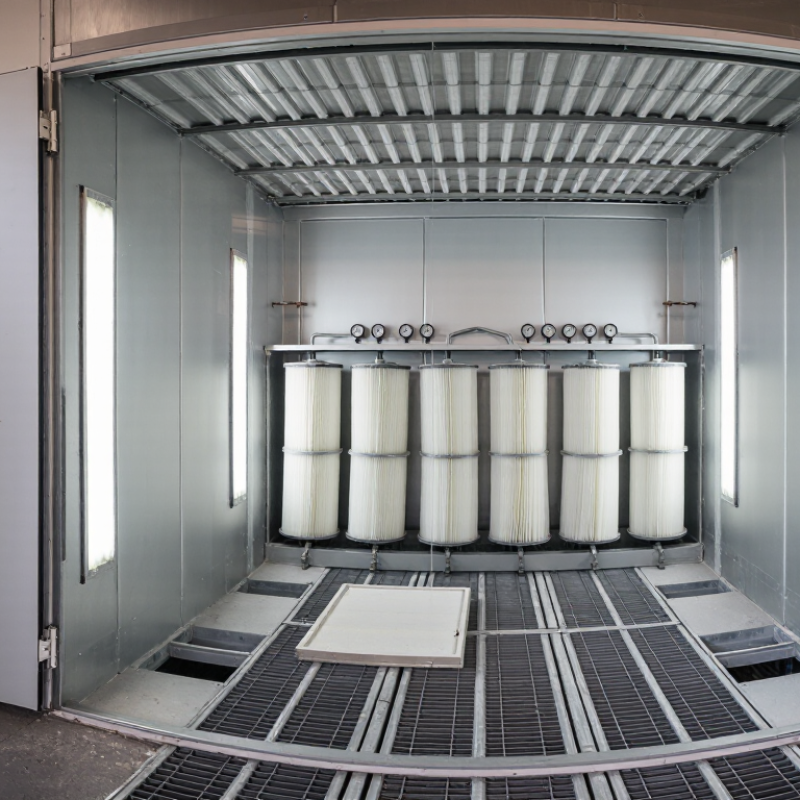
A powder coating booth filter captures overspray before it enters the exhaust system or work area. It usually contains cartridge, panel, or bag filters. Each type uses a different surface area and cleaning method. The filter separates fine powder from moving air while maintaining stable booth airflow. It is not just mesh.

During a booth inspection, technicians often check powder buildup around filter seams, gaskets, and cartridge pleats. These details matter. A damaged seal can release visible dust, even when the filter appears clean. Pressure readings also provide useful evidence. A rising pressure drop often indicates loading, poor cleaning, or an unsuitable filter design.

The U.S. Environmental Protection Agency’s AP-42 emissions guidance uses powder coating transfer efficiencies of up to 95% in calculation examples. This figure does not mean every booth achieves that result. Actual performance depends on airflow balance, gun settings, filter condition, and operator technique. That assumption is incomplete. The National Fire Protection Association’s powder coating guidance also emphasizes ventilation, dust collection, grounding, and housekeeping around combustible powder. A filter should therefore be selected as part of the entire collection system, not as an isolated replacement part. Check airflow, filtration efficiency, cleaning frequency, and disposal procedures against the equipment manual and applicable workplace requirements. A cheaper filter may create higher energy use, more downtime, and inconsistent coating quality. Some maintenance decisions deserve a second look.

How Powder Coating Booth Filters Capture Overspray

What Are Powder Coating Booth Filters?

How Powder Coating Booth Filters Capture Overspray

Powder coating booth filters remove airborne powder that misses the workpiece. Booth airflow pulls overspray away from the operator and toward the filter chamber. The filter media traps particles while cleaner air moves toward the exhaust system. Cartridge and bag filters are common choices for this separation step.

Particle size matters. Powder particles often range from about 10 to 100 micrometres, although formulations vary. Under ISO 16890, filter performance is reported for ePM1, ePM2.5, and ePM10 particle fractions. This classification helps engineers compare filtration efficiency more realistically than a single “capture rate.” The U.S. EPA’s AP-42 guidance also identifies powder coating as a low-VOC process, but low VOC does not mean zero airborne dust.

Pulse cleaning periodically sends compressed air through cartridges. The reverse shock loosens collected powder and restores airflow. A rising pressure drop can indicate loading, poor cleaning, or an unsuitable filter. Small details matter. Leaks around gaskets can bypass the media entirely. I have seen systems with clean-looking filters perform poorly because seals were ignored. NFPA 33 guidance emphasizes ventilation, dust control, and ignition-risk management for spray operations. Filter maintenance must therefore include grounding checks, differential-pressure records, and careful powder disposal. Reclaiming overspray may reduce waste, but inconsistent powder mixtures can affect coating quality.

Main Types of Powder Coating Booth Filters

What Are Powder Coating Booth Filters?

Main Types of Powder Coating Booth Filters

Powder coating booth filters capture airborne powder before it reaches workers, equipment, or exhaust ducts. Their design affects air balance, cleaning frequency, and powder recovery. Cartridge filters are widely used because pleated media offers a large filtering area in a compact housing. A pulse of compressed air removes accumulated powder from the pleats. This works well, but excessive pulse pressure can shorten filter life.

Bag filters use fabric sleeves to collect powder. They suit some high-volume systems and can tolerate continuous operation when correctly sized. However, bags may require more space and careful inspection around seams. Panel or pre-filters catch larger particles before they reach finer media. They are inexpensive, but they cannot replace a primary booth filter.

HEPA filters provide higher-efficiency final filtration for very fine particles. They are useful where stricter air cleanliness is required. Their pressure drop can rise quickly when upstream filtration is poor.

Filter selection should consider powder type, booth airflow, humidity, and cleaning method. A recovery booth may also use a cyclone separator before the final filters. A cyclone is not a filter, strictly speaking.

Real maintenance experience shows that a filter can look clean while airflow is already falling. Pressure readings are more dependable than appearance alone. Still, gauges can drift, and operators sometimes record readings inconsistently. That weakness deserves attention. Inspect seals, gaskets, and filter frames during each service visit. Even a high-quality filter performs poorly when air bypasses its media.

How to Choose the Right Booth Filter

What Are Powder Coating Booth Filters?

Powder coating booth filters capture airborne powder before exhaust air leaves the booth. Choosing the right filter affects airflow, finish quality, maintenance, and worker protection. Start with the booth’s airflow requirement, not only the filter’s physical size. A filter that fits the frame may still restrict ventilation. Check pressure-drop data from the filter supplier and compare it with the booth fan capacity. In practice, a clean filter may show steady airflow, while a loaded filter can make spray patterns uneven.

Filter material must match the powder, production volume, and cleaning method. Cartridge filters suit many recovery systems because they provide a large filtration area in a compact space. Panel or final filters may support secondary filtration, especially where cleaner exhaust air is required. Confirm the filter’s temperature rating, dust-loading capacity, sealing method, and compatibility with the powder collection system. Small gaps around a gasket can release visible dust, even when the filter media is high quality.

Tips: Measure airflow and pressure regularly. Keep a simple maintenance log with dates, readings, and filter changes. Replace filters when performance declines, not only when they look dirty. Never guess the replacement interval; powder type and daily workload change it. I have seen operators delay replacement to reduce costs, then spend more correcting poor coverage and heavy booth buildup. That trade-off deserves a second look. Always follow equipment instructions and applicable workplace safety requirements.

What Are Powder Coating Booth Filters? - How to Choose the Right Booth Filter

Powder coating booth filters capture overspray, protect the exhaust system, and help maintain consistent airflow. The chart compares common filter options using practical selection ratings from 1 to 5, where 5 represents the strongest fit for the listed factor.

Cartridge filters are commonly selected for compact booths and reclaim systems. Baghouse filters suit higher powder loads and continuous-duty applications, while panel or final filters are typically used for secondary filtration rather than primary powder recovery. Actual selection should also consider airflow, powder chemistry, filter area, pressure drop, cleaning method, and local safety requirements.

Filter Maintenance, Replacement, and Safe Disposal

What Are Powder Coating Booth Filters?

Powder coating booth filters capture airborne overspray before it reaches workers, equipment, or the surrounding area. They may use cartridge, panel, or bag-style designs. Each filter collects powder differently, so maintenance must follow the equipment instructions and safety data information.

During inspections, technicians should check pressure readings, filter surfaces, gaskets, and connection points. A sudden pressure increase often means the filter is loading with powder. A damaged seal can release fine dust, even when the filter looks usable.

Stop the booth before servicing it. Isolate electrical power, wear suitable respiratory and eye protection, and prevent dust from spreading. Avoid aggressive compressed-air cleaning. It can create a visible cloud and increase combustible dust risks.

Tips:

Record pressure readings weekly. Replace filters when airflow falls, seals fail, or cleaning no longer restores performance. Bag removed filters carefully, keeping powder contained and away from ignition sources.

Disposal requirements can vary by powder chemistry and local rules, so review the safety data sheet and ask an approved waste professional when uncertain. Never assume used powder is harmless because it appears dry. That assumption needs checking.

In practice, rushed maintenance causes many avoidable problems. A clean work area, clear records, and trained personnel provide more reliable control than appearance alone.

FAQS

What does a powder coating booth filter do?

It captures airborne overspray before exhaust air leaves the booth. It also helps maintain stable airflow and cleaner working conditions. It is not simply mesh.

Which filter types are commonly used?

Common types include cartridge, panel, and bag filters. Each type offers different surface area, cleaning methods, and airflow resistance. The best choice depends on the booth system.

How can I choose the correct filter size?

Start with the booth’s required airflow, not only the filter’s dimensions. A filter may fit the frame yet restrict ventilation. Compare pressure-drop data with the fan’s capacity.

What signs show that a filter needs attention?

Rising pressure readings can indicate powder loading or poor cleaning. Uneven spray patterns may also suggest restricted airflow. Powder around seams and gaskets deserves immediate inspection.

Can a clean-looking filter still leak powder?

Yes. A damaged gasket or loose seam can release visible dust. The filter media may look clean while the seal has failed. Small gaps matter.

How often should booth filters be replaced?

Replace filters when airflow or filtration performance declines. Do not rely only on appearance or a fixed calendar date. Powder type and daily workload change the interval.

What maintenance records should operators keep?

Record inspection dates, airflow readings, pressure readings, cleaning, and filter changes. A simple log can reveal gradual performance loss. I might overlook trends without written records.

Why should filter selection consider the entire collection system?

The filter affects airflow, energy use, coating consistency, and maintenance time. It must match the powder, fan, cleaning method, and recovery equipment. A cheaper filter may cost more later.

What safety details should be checked around a booth filter?

Check ventilation, grounding, dust collection, housekeeping, and disposal procedures. Follow the equipment manual and applicable workplace requirements. Never assume one filter solves every safety concern.

Conclusion

Powder Coating Booth Filters are essential components in finishing systems, designed to capture airborne powder that does not adhere to a workpiece during application. They help maintain cleaner booth conditions, support efficient powder recovery, and reduce the amount of overspray entering surrounding work areas. Depending on the booth design and operating needs, common filter types include cartridge filters, fabric or bag filters, and panel-style pre-filters. Each type offers different levels of filtration, airflow performance, durability, and cleaning convenience.

Choosing the right filter requires considering powder characteristics, booth size, airflow requirements, coating volume, and the desired level of recovery. Proper maintenance is equally important: filters should be inspected regularly, cleaned according to operating procedures, and replaced when airflow decreases, damage appears, or filtration performance declines. Used filters should be handled, contained, and disposed of safely in accordance with applicable workplace and environmental requirements. With suitable selection and routine care, Powder Coating Booth Filters can improve system reliability, work-area cleanliness, and overall coating efficiency.

Liam

Liam

Liam is a dedicated marketing professional with a profound expertise in the industry, where he excels at highlighting the unique advantages of our core products. With a keen understanding of market trends and consumer needs, Liam frequently updates our company’s professional blog, providing......