Top 10 Paint Booth Filters for Better Air Quality

Time:2026-10-26 Author:Oliver
0%

Paint booth filters are easy to overlook, yet they shape visibility, finish quality, worker exposure, and maintenance costs. Overspray can settle on booth walls, exhaust ducts, and freshly painted surfaces within minutes. A poorly selected filter may look clean while allowing fine particles to pass through.

The U.S. Environmental Protection Agency’s AP-42 guidance identifies spray-coating operations as sources of particulate matter and volatile organic compound emissions. OSHA’s Technical Manual also stresses effective local exhaust ventilation and regular system maintenance. These references support a practical point: filtration cannot compensate for weak airflow, poor filter fit, or neglected replacement schedules. Airflow tells only part of the story.

Industrial hygienist Mark J. McKernan offers a useful reminder: “Source capture matters more than hopeful airflow.” That principle guides this Top 10 comparison of Paint Booth Filters. The list considers capture efficiency, pressure drop, loading behavior, replacement intervals, media construction, and total operating cost. Some filters protect the finish. Others prioritize particle holding capacity. A few try to balance both, imperfectly.

That imperfection matters.

Recent market analyses from Grand View Research and Fortune Business Insights describe continued growth in industrial coating and air-filtration demand. However, market growth does not guarantee better booth performance. A high-efficiency filter can increase fan energy use when resistance rises. A cheaper filter can create more frequent changeouts and unstable spray conditions.

The best choice depends on coating chemistry, booth design, spray volume, airflow targets, and maintenance discipline. This guide examines those details closely, helping readers choose filters based on measured performance rather than packaging claims.
Top 10 Paint Booth Filters for Better Air Quality

Paint Booth Filters: Purpose, Structure, and Air Quality Basics

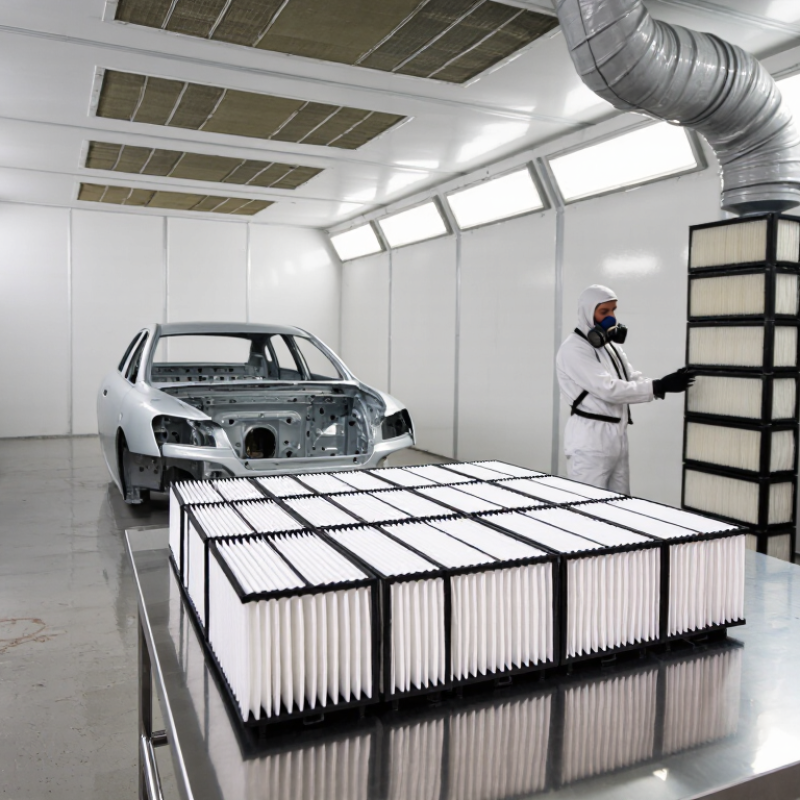
Paint booth filters support cleaner air by controlling overspray, dust, and fine coating particles. Their purpose extends beyond surface protection. They also help protect workers, fans, ductwork, and nearby equipment from airborne residue. In daily booth inspections, technicians often find heavy buildup around filter edges. That pattern may indicate poor sealing or uneven airflow. Small details matter. A clean filter can still perform poorly when its frame is bent or its gasket is damaged.

A typical booth uses several filtration stages. Intake filters remove dust before it reaches the work area. Exhaust filters capture paint particles before air leaves the booth. Some processes require finer final filtration, depending on particle size, coating type, and air-quality goals. Each filter has a defined resistance range. As dust accumulates, pressure rises and airflow may fall. A pressure gauge provides useful evidence, but it should not replace visual checks or maintenance records.

Air quality depends on more than filter material. Balanced supply and exhaust airflow helps prevent turbulence around the painted surface. Stable temperature and humidity can also reduce coating defects and improve worker comfort. I have seen teams replace filters by calendar dates alone, which is convenient but not always accurate. Actual loading varies with production volume, spray technique, and coating solids. That limitation deserves attention. Regular inspections should check pressure, airflow direction, filter seating, and visible leakage before booth performance begins to decline.

Top 10 Paint Booth Filter Performance Reference

The chart compares the minimum filtration efficiency of MERV 7–16 filter classes for particles measuring 3.0–10.0 micrometers. Higher-rated filters can improve particulate removal, but paint booth systems must also consider airflow, pressure drop, overspray loading, and exhaust requirements.

Values shown are minimum efficiency thresholds associated with MERV classifications under ASHRAE Standard 52.2 for the 3.0–10.0 micrometer particle-size range. MERV ratings describe general air-filter performance and are not a substitute for paint booth-specific filter testing or ventilation design.

How to Evaluate Filter Efficiency, Capacity, and Compatibility

A useful paint booth filter is not simply the one with the highest efficiency rating. ASHRAE Standard 52.2 evaluates particle removal and pressure resistance under controlled conditions. It does not predict service life inside a heavily loaded booth. Real performance changes when overspray forms a sticky cake across the media.

Check three figures: efficiency, holding capacity, and pressure drop. Higher efficiency can restrict airflow faster. A rising differential-pressure gauge may reveal this before the finish becomes uneven. EPA AP-42 guidance identifies transfer efficiency, booth airflow, and overspray control as important factors in coating operations. Filter selection must support all three, not just cleaner exhaust air.

Compatibility is often overlooked. Confirm the filter’s frame size, sealing method, airflow direction, temperature limit, and resistance to the coating chemistry. Waterborne coatings can load media differently from solvent-based coatings. Some capture stages need coarse prefiltration, while final stages require finer media. ISO 16890 provides useful ePM classifications for general air filtration, but its ratings should not be treated as a complete paint-booth test.

Field checks matter. Record pressure drop at installation, then compare it weekly. Inspect for bypass gaps, damp patches, and uneven loading. The perfect rating on paper may fail in a poorly sealed housing. That is the uncomfortable part. Filter life estimates are often too optimistic when booth loading, spray technique, and maintenance vary.

The Top 10 Paint Booth Filter Types and Their Best Uses

Filter choice should follow the contaminant, airflow, and coating process. An intake prefilter catches dust before it reaches the booth. Use pleated paper or synthetic media for general preparation areas. Fiberglass paint-arrestor pads suit liquid overspray and are easy to inspect. Polyester rolls handle heavier production. Pocket filters protect supply-air systems. Metal mesh works for coarse particles, but it is not a final filter.

EPA AP-42, Chapter 4.2, reports typical transfer efficiencies of about 20–40% for conventional spray, 40–65% for HVLP, and up to 95% for electrostatic application. That range changes filter loading dramatically. Use high-capacity exhaust media when overspray is frequent. HEPA filters suit fine particulate control after effective prefiltration. Do not treat HEPA media as vapor control. Activated-carbon panels target solvent vapors, not wet paint particles. Carbon also needs careful replacement records.

NFPA 33 guidance emphasizes airflow and preventing combustible overspray accumulation. Pressure gauges make loading visible. A rising differential pressure usually signals restricted airflow. Replace filters by measured pressure, not appearance alone.

In field audits, operators often overlook intake filters. That small mistake can distort booth balance. I would question one common habit: changing every filter on the same day. Useful, perhaps, but wasteful. Document airflow, pressure, and coating volume before changing the schedule.

How to Choose the Right Filter for Each Painting Application

Top 10 Paint Booth Filters for Better Air Quality

Choosing the right paint booth filter depends on the coating, spray method, and airflow design. A thin intake panel filter can catch dust before it reaches the booth. Pleated filters offer more surface area and usually hold particles longer. For overspray, fiberglass or polyester paint arrestor media is often more suitable. High-efficiency filters may support finer particle control, but they can restrict airflow when loaded. That matters.

Water-based coatings and solvent-based coatings do not create identical risks. Activated carbon filters can help reduce certain vapors, but they do not replace proper ventilation or exposure controls. HEPA filters capture very small particles, yet they are not designed to remove most chemical vapors. Ceiling diffusion filters support cleaner downward airflow, while exhaust filters protect ductwork and surrounding areas. Pocket filters and rigid-panel filters can work well as secondary stages when the booth needs staged filtration.

Check the filter’s pressure rating, capture efficiency, and material compatibility. Measure airflow with a gauge instead of judging by appearance. A filter that looks clean may already be restricting air. Replace filters according to pressure readings, coating buildup, and the manufacturer’s service guidance. Local requirements also matter. One detail is easy to miss: a cheaper filter can create higher energy costs when it loads quickly. I would not choose by price alone. Test the filter during real production, then adjust the setup when evidence proves the first choice was imperfect.

Installation, Maintenance, and Replacement Practices for Reliable Filtration

Reliable paint booth filtration begins with correct installation, not a rushed filter change. Match each filter to its stage, airflow direction, and booth design. Install pre-filters evenly, without folded corners or open gaps. Check the gasket contact with a bright inspection light. Small leaks can carry overspray around the media. Keep the filter frame clean before fitting a new panel. Wear suitable protective equipment during handling and cleaning.

Maintenance should follow pressure readings, visual checks, and actual booth use. Record the gauge reading after every shift, especially during heavy production. A rising pressure drop usually indicates loading. However, pressure alone can mislead when gauges are damaged or poorly calibrated. Inspect the filter surface for uneven dust, wet patches, and damaged edges. Clean nearby grilles and duct access points without disturbing the filter media. Do not shake or reuse disposable filters. That practice saves little and can reduce air quality.

Replacement timing should reflect operating conditions rather than a convenient calendar date. Change filters when airflow falls, coating quality changes, or the pressure limit is reached. Replace damaged filters immediately, even when readings appear normal. Confirm the replacement size before opening the package. One wrong measurement can stop a booth for hours. I have seen teams focus on the exhaust filter while ignoring overloaded intake filters. Both stages matter. Keep installation dates, pressure readings, and filter quantities in a simple log. A perfect schedule is unrealistic, but consistent records reveal problems early. Dispose of used filters according to applicable local requirements.

Top 10 Paint Booth Filters for Better Air Quality - Installation, Maintenance, and Replacement Practices for Reliable Filtration
# Filter Type Typical Filter Media Primary Location Typical Efficiency or Rating Key Installation Practice Maintenance and Inspection Replacement Indicator Main Filtration Benefit
1 Intake Pre-Filter Panel Spun-bond polyester, synthetic fiber, or pleated cellulose-synthetic media Fresh-air intake and make-up air units ISO Coarse to ePM10
Commonly used for larger airborne particles
Install with the airflow arrow pointing toward the booth. Seal the frame to prevent air bypass. Check for dust loading, tears, moisture, and frame damage at least monthly during normal operation. Replace when visibly loaded, damaged, wet, or when pressure drop exceeds the equipment limit. Protects finer filters and reduces dust entering the spray area.
2 Paint Booth Ceiling Filter Progressive-density polyester or synthetic pocketless media Supply-air ceiling plenum High-efficiency particulate prefiltration
Often selected for low-lint applications
Cover the full support grid, keep media flat, and use retaining clips where required. Avoid gaps between sections. Inspect for uneven loading, sagging, lint release, and bypass around the perimeter. Replace when airflow becomes uneven, pressure drop rises, or surface defects appear on the coating. Helps prevent dust, fibers, and ceiling-plenum debris from reaching painted surfaces.
3 Intake Pocket Filter Synthetic pocket or bag media with multiple air pockets Make-up air systems and booth supply sections MERV 8–13
Rating depends on media construction and test standard
Install pockets vertically so they can expand freely. Ensure the gasketed header is fully seated. Inspect pocket inflation, seam condition, header fit, and differential pressure. Replace when pockets collapse, seams fail, pressure drop is excessive, or airflow falls below the design requirement. Provides greater dust-holding capacity than many flat panels.
4 Paint Arrestor Roll Media Fiberglass, polyester, or layered synthetic roll media Exhaust plenum and overspray collection zone Coarse overspray capture
Efficiency varies with paint type and loading level
Load the media in the correct direction and maintain continuous contact with the support screen. Monitor overspray buildup, airflow distribution, media sag, and any signs of saturation. Replace before overspray blocks airflow or the media becomes saturated and creates a fire or contamination concern. Captures wet and dry paint particles before they reach the exhaust duct or secondary filter.
5 Exhaust Paint Arrestor Panel Layered fiberglass or nonwoven synthetic media Exhaust wall, floor-level exhaust, or rear filter bank Overspray arrestor
Designed for paint particle loading rather than general dust removal
Fit panels tightly in the holding frame and prevent gaps at corners and joints. Check for paint accumulation, airflow restriction, damaged retainers, and filter bypass. Replace at the pressure-drop limit or when loaded areas cause visible airflow imbalance. Extends the service life of downstream filters and helps keep exhaust passages cleaner.
6 Pleated Secondary Filter Pleated synthetic or cellulose-synthetic blend on a rigid support frame After the intake pre-filter or before final supply filtration MERV 11–14
Common range for finer particulate control
Confirm the airflow direction, support the pleat pack correctly, and seal the perimeter gasket. Record differential pressure and inspect pleats for collapse, moisture, or uneven dust loading. Replace when the manufacturer’s final pressure-drop limit is reached or the media is damaged. Captures finer dust particles and reduces the loading rate of final-stage filters.
7 High-Efficiency Final Filter Fine-fiber glass or synthetic media in a rigid separatorless or mini-pleat design Final supply-air stage for controlled finishing areas MERV 14–16
Exact performance must be verified from the filter test certificate
Use a clean installation area, avoid touching the media pack, and tighten clamps evenly to prevent bypass. Inspect seals and measure pressure drop regularly. Do not clean by blowing compressed air through the media. Replace at the specified pressure-drop limit, after media damage, or when particle control deteriorates. Improves air cleanliness for high-quality finishing and reduces airborne particulate defects.
8 HEPA Final Filter Microfine glass-fiber media with a rigid frame and sealed gasket Critical final supply-air or clean finishing zones H13: 99.95% at MPPS
Under EN 1822 classification when correctly tested and installed
Install only in a qualified housing. Verify gasket compression, airflow direction, and system integrity after installation. Carry out periodic pressure-drop checks and leak testing according to the site quality plan. Replace when pressure drop is excessive, the media or gasket is damaged, or integrity testing fails. Provides very high removal of fine airborne particles when the housing has minimal bypass.
9 Activated Carbon Filter Granular or impregnated activated carbon in a panel, tray, or deep-bed module Exhaust treatment or recirculation systems where permitted Gas-phase adsorption
Performance depends on carbon mass, chemical composition, humidity, and contact time
Install downstream of an effective particulate filter and protect carbon from liquid paint and excessive moisture. Monitor odor breakthrough, pressure drop, moisture exposure, and carbon condition. Follow applicable solvent-handling requirements. Replace when target vapors or odors break through, adsorption capacity is exhausted, or the bed is contaminated. Reduces selected solvent vapors and odors; it does not replace particulate filtration.
10 Final Exhaust Filter or Mist Eliminator Coalescing mesh, knitted wire, fiberglass, or high-loading synthetic media Downstream exhaust stage before duct discharge Fine mist and residual aerosol control
Performance varies by coating material and filter design
Install with the correct orientation and provide drainage or collection provisions where the design requires them. Inspect for liquid accumulation, pressure drop, corrosion, damaged mesh, and signs of aerosol carryover. Replace or clean only when approved by the filter design; service immediately if liquid carryover is observed. Limits residual paint mist and helps protect exhaust ducts, fans, and the surrounding environment.
Practical note: Actual service life, pressure-drop limits, and filtration performance depend on booth airflow, coating chemistry, operating hours, humidity, overspray loading, and the filter manufacturer’s test data. Always follow the booth equipment manual, applicable fire-safety requirements, and local environmental regulations.

FAQS

What is the main purpose of a paint booth filter?

It captures dust, overspray, and fine coating particles. Filters also protect workers, fans, ductwork, and nearby equipment. Small gaps matter.

What filtration stages are commonly used in a paint booth?

Intake filters remove dust before air enters the work area. Exhaust filters capture coating particles before air leaves. Finer final filters may support stricter air-quality goals.

How does dust buildup affect booth performance?

Dust increases filter resistance and can reduce airflow. Pressure may rise as the filter loads. Airflow can become uneven around the painted surface.

How should I choose a filter for different coatings?

Consider the coating, spray method, particle size, and booth airflow design. Fiberglass or polyester media often suits overspray. The first choice may still need adjustment.

Can activated carbon filters remove all coating vapors?

No. Activated carbon can help control certain vapors, but it does not replace ventilation or exposure controls. HEPA filters capture tiny particles, not most chemical vapors.

How can I tell whether a filter needs replacement?

Check pressure readings, airflow, visible buildup, coating quality, and filter damage. Do not rely on calendar dates alone. Actual loading varies with production.

What should I inspect during filter installation?

Match the filter to its stage and airflow direction. Check the frame, gasket, corners, and seating. Use a bright light to find small leaks.

Is a visually clean filter always working properly?

Not always. A bent frame, damaged gasket, or hidden loading can reduce performance. Measure airflow instead of trusting appearance alone.

How often should paint booth filters be replaced?

Replace them when pressure reaches its limit, airflow falls, or coating quality changes. Damaged filters need immediate replacement. A perfect schedule is unrealistic.

What maintenance records are useful?

Record pressure readings, inspection results, installation dates, and filter quantities. Check readings after each shift during heavy production. Records reveal problems earlier.

Conclusion

Paint Booth Filters play a vital role in controlling airborne particles, overspray, and contaminants during painting operations. Their structure and media determine how effectively they capture pollutants while supporting clean airflow and a healthier work environment. This guide explains how to assess filter efficiency, dust-holding capacity, pressure resistance, and compatibility with different booth designs, coatings, and ventilation systems.

It also reviews ten common filter types and their most suitable applications, from preliminary particle capture to finer exhaust filtration. Readers will learn how to match filter performance with painting conditions, production volume, coating characteristics, and air-quality goals. Proper installation is equally important: filters should be fitted securely, inspected regularly, and replaced when loaded, damaged, or unable to maintain acceptable airflow. Following a practical maintenance schedule helps improve filtration reliability, reduce operational disruptions, protect equipment, and support consistent finishing results.

Oliver

Oliver

Oliver is a seasoned marketing professional with a wealth of expertise in driving brand awareness and engagement. With a deep understanding of our company's product offerings, he consistently delivers high-quality content that enriches our professional blog. His insights not only shed light on......