Maintaining air quality in a spray booth is crucial for both health and safety. A Spray Booth Ceiling Filter plays a vital role in trapping harmful particles, ensuring clean air circulation. Choosing the right filter can drastically improve working conditions.
Not all filters are created equal. Selecting effective filters involves knowledge of various materials and their efficiency. Some filters may be more costly but offer better performance. Others may seem affordable but compromise air quality.
In this landscape, it is essential to analyze options. Understanding filter specifications and real-world applications allows for informed decisions. While some may overlook the impact of a ceiling filter, its significance should not be underestimated. Investing time in research can lead to a safer, more efficient spray booth environment.
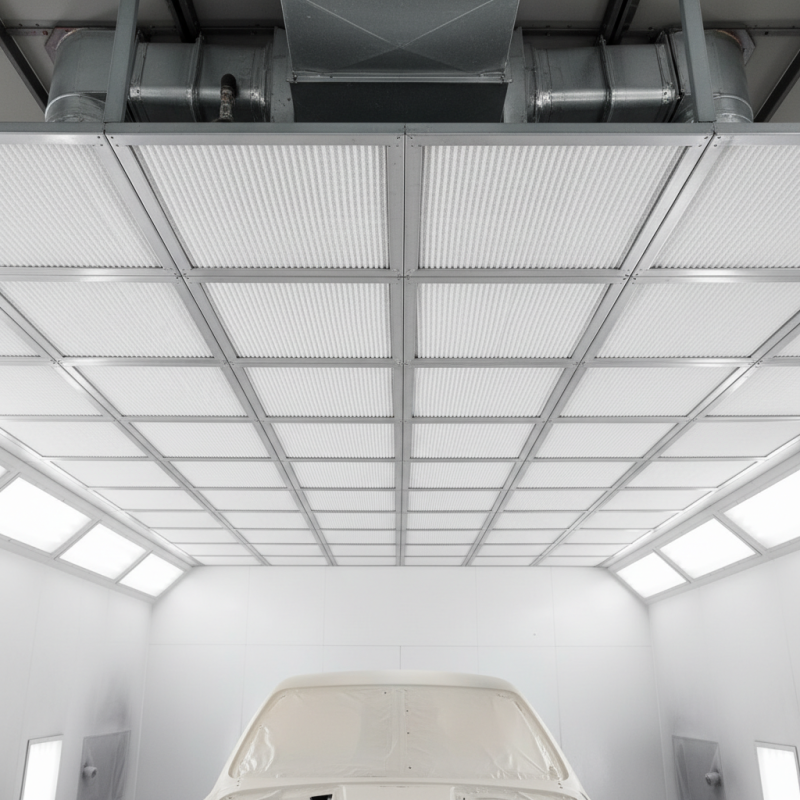
In a spray booth, ceiling filters play a crucial role in maintaining air quality. They capture overspray, dust, and other particulates. Understanding the types of these filters is essential for effective air management.
High-efficiency filters are favored for their great performance. These filters can trap particles as small as 0.3 microns. However, they can be more costly. On the other hand, standard filters offer decent results at a lower price. They may require more frequent replacements.
Considerations for selecting filters include efficiency ratings and lifespan. An efficient filter can prevent contaminants from circulating back into the booth. However, performance may weaken over time, necessitating closer inspections. A filter that works well today may not perform the same tomorrow. Regular maintenance is vital to ensure ongoing effectiveness.
In spray booth environments, maintaining optimal air quality is crucial. Filters play a vital role in achieving this. They capture contaminants like dust, overspray, and volatile organic compounds (VOCs) during painting processes. According to industry studies, poor air quality can lead to respiratory issues. A report by the Environmental Protection Agency indicates that fine particulate matter can reduce lung function. Effective filters mitigate these risks.
Choosing the right filter is essential. High-efficiency particulate air (HEPA) filters can remove 99.97% of particles as small as 0.3 microns. However, not all booths are equipped with such advanced options. Many designs still use lower efficiency filters that fail to capture smaller particles. Testing and regular maintenance of filter systems ensure they meet air quality standards. Industry standards recommend replacing filters frequently to prevent accumulation of hazardous materials.
While many users focus on filter replacement, the entire ventilation system must be considered. Building a truly effective air quality strategy involves assessing airflow patterns. Poor design can lead to weak spots, allowing contaminants to linger. Reflections on filtering strategies highlight that just having filters isn’t enough; the entire system must work harmoniously to ensure a clean environment.
When selecting ceiling filters for spray booths, it’s crucial to consider their filtration efficiency. High-quality filters trap airborne particles effectively. Look for options with a MERV rating of at least 8. Filters with higher MERV ratings capture smaller particles, ensuring cleaner air and protecting both workers and equipment.
Another important feature is the filter’s compatibility with your existing spray booth setup. Some filters are designed to fit specific models or sizes. Make sure the dimensions match your booth’s ceiling. Ease of installation is another factor, as filters should be simple to replace, minimizing downtime.
Durability matters, too. Opt for filters that can withstand moisture and chemicals commonly found in spray booths. Regular maintenance will be necessary, so choose filters that are easy to clean or replace. Reflecting on these features will help ensure you create a safer working environment.
The pursuit of effective air quality in spray booths has led to significant innovations in ceiling filter technology. Filters designed for these environments vary in terms of efficiency and design. Many modern options prioritize both filtration capability and airflow. High-efficiency particulate air (HEPA) filters are known for trapping even the smallest particles. This ensures that the air remains clean without compromising the booth's ventilation.
Recent advancements also focus on materials that enhance filter longevity. Some filters utilize synthetic fibers, which are lightweight and durable. This helps reduce the frequency of replacements while still maintaining high air quality standards. The technology behind these filters requires regular updates to keep up with air quality regulations. Users need to stay informed about any new developments, as the best options evolve quickly.
As these filters improve, there remains a need to evaluate their performance regularly. Some users report less effective filtration in challenging environments. This highlights the importance of ongoing testing and maintenance. Understanding these nuances can significantly enhance air quality. The right approach combines awareness of technological advancements with practical application in specific settings.
In spray booths, maintaining air quality is crucial. Regulatory standards require strict adherence to safety guidelines. These standards address particulate matter and volatile organic compounds (VOCs). Proper ventilation and filtration are key to achieving compliance. Poor air quality can lead to health issues for workers and impact product quality.
Regularly checking filters is essential. Filters need to be replaced based on usage and environmental conditions. A clogged filter reduces airflow and efficiency. This can lead to toxic build-up and potential violations of safety regulations. Inspecting the integrity of the booths should be routine. Small air leaks can significantly affect air quality.
Employee training also plays a vital role. Workers must understand the importance of air quality. They should be educated on the signs of inadequate ventilation. Regular audits and assessments will help ensure compliance. Creating a culture of safety is important. This adds another layer of protection and promotes a healthy workplace.
| Filter Type | Efficiency (%) | Particle Size Captured (µm) | Lifespan (Months) | Regulatory Compliance |
|---|---|---|---|---|
| HEPA Filter | 99.97 | 0.3 | 6-12 | ISO 14644-1 |
| Activated Carbon Filter | 85 | 0.5 | 3-6 | N/A |
| MERV 13 Filter | 90 | 1.0 | 6-12 | ASHRAE 52.2 |
| Polyester Filter | 70 | 2.0 | 3-6 | N/A |
| Electrostatic Filter | 95 | 0.3 | 12 | N/A |
: They maintain air quality by capturing overspray, dust, and other particulates.
They can trap particles as small as 0.3 microns, offering great performance.
Yes, they generally cost more than standard filters, but provide better performance.
They offer decent results but may need more frequent replacements, leading to extra costs.
The filtration efficiency, ideally with a MERV rating of at least 8, is important.
Filters must fit your specific booth setup to work correctly and efficiently.
Regular inspections and maintenance are necessary, as performance can weaken over time.
Filters need to withstand moisture and chemicals, affecting their lifespan and effectiveness.
A neglected filter may circulate contaminants, compromising air quality over time.
No, some may be difficult to install or remove, leading to longer downtimes.
When it comes to ensuring effective air quality in spray booths, selecting the right Spray Booth Ceiling Filter is crucial. Various types of filters are available, each with different efficiency ratings that play a significant role in maintaining air quality standards. Understanding these types and their performance metrics helps operators make informed choices that align with specific requirements.
Key features to consider when selecting a ceiling filter include its filtration capacity, durability, and compatibility with existing booth systems. Innovations in filter technology continue to enhance air purification processes, while adherence to regulatory standards and best practices further ensures compliance with safety norms. By prioritizing the right Spray Booth Ceiling Filter, businesses can significantly improve air quality, protect worker health, and enhance the overall efficiency of their operations.

LJF Air FILTER