In the realm of spray booths, the right air filtration is crucial. Effective filtration enhances air quality and protects workers. As expert Sarah Jennings, a leading authority in the field, notes, "Choosing the right filter for spray booth operations is not just about efficiency; it's about safety."
Filters for spray booths vary in design and material. A key factor is the ability to capture harmful particles and vapors. Proper filtration helps create a safer work environment. Furthermore, selecting the best fit is no simple task. It requires insight into various filter types and their functions.
While many filters promise high efficiency, some may not perform as expected. This inconsistency leads to the need for careful research and understanding. Choosing a filter for spray booth applications can be daunting. However, the right choices will enhance safety and productivity in any operation.
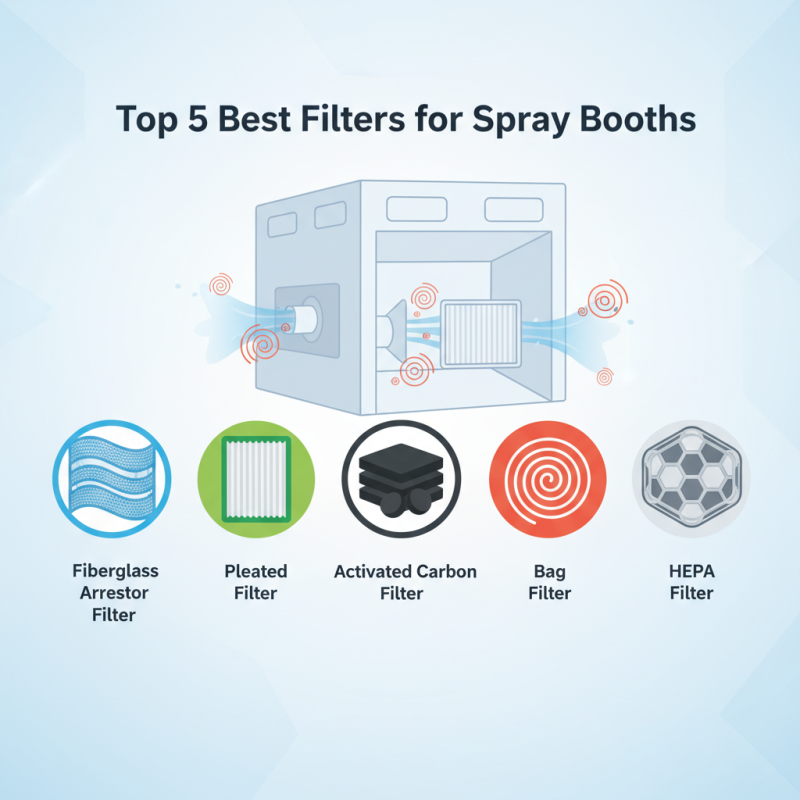
Top 5 Essential Filter Types for Optimal Spray Booth Operation
In the operation of spray booths, using the right filters is crucial for both safety and performance. Commonly, five types of filters prove essential for optimal functionality. These include pre-filters, HEPA filters, activated carbon filters, paint arrestor filters, and electrostatic filters.
Pre-filters capture larger particles, reducing the load on more efficient filters. A recent study indicated that pre-filters can improve overall air quality by up to 30%. HEPA filters follow, designed to capture 99.97% of airborne particles. Such precision is vital in environments handling volatile compounds.
Activated carbon filters serve a dual purpose by removing odors and harmful gases. They often face challenges in durability and efficiency. Regarding paint arrestor filters, they collect paint overspray efficiently, preventing contamination in the air. These filters can become saturated quickly, necessitating regular replacement.
Electrostatic filters use an electric charge to attract particles. While effective, they require proper maintenance to ensure optimal performance. Each of these filters fulfills specific roles but also poses unique challenges. Adopting a combination of these filters enhances booth performance, though it requires ongoing evaluation and adjustment.
Understanding Particulate Filters: Efficiency Ratings and Applications
When it comes to spray booths, understanding particulate filters is crucial. These filters significantly impact air quality and worker safety. They are designed to capture various airborne particles, such as dust, paint overspray, and other contaminants. Efficiency ratings help determine how effective a filter is in removing these particulates from the air. Higher efficiency typically means better filtration, but it can also affect airflow.
Some common applications of particulate filters include automotive painting and woodworking. In automotive spray booths, filters prevent expensive contaminants from ruining glossy finishes. Similarly, woodworking shops benefit from filters that capture fine wood dust, which can be hazardous. It's vital to evaluate the specific needs of your spray booth.
Sometimes, filters may not perform as expected. Issues can arise due to improper installation or inadequate maintenance. Users often overlook the importance of regular checks, leading to decreased performance. Monitoring filter life and performance can ensure a safer environment. It’s essential to remain informed about the latest developments in filtration technology for optimal safety and efficiency.
Exploring Activated Carbon Filters for Odor and VOC Control
When it comes to maintaining a safe and pleasant environment in spray booths, activated carbon filters play a crucial role. These filters are designed to capture odors and volatile organic compounds (VOCs) effectively. They work by adsorbing harmful particles, ensuring that the air quality remains high. The effectiveness of these filters often depends on their lifespan and maintenance. Regularly checking and replacing them is essential to avoid buildup, which can reduce air quality over time.
Activated carbon filters are not flawless. They can lose their effectiveness if saturated or poorly maintained. Factors like humidity and temperature can also affect their performance. It's important to understand these nuances. Many users find that they need to experiment with different filter setups to find the best fit for their specific spray booth conditions. This trial-and-error approach can lead to better odor and VOC control, but it requires careful monitoring.
In practice, ensuring proper airflow and placement of these filters is key. Often, individuals overlook the orientation of the filters, which can diminish their efficiency. Gaps or improper sealing can also allow odors to escape, nullifying the benefits. Understanding the specifications and limitations of activated carbon filters is essential for achieving optimal results in odor and VOC control within spray booths.
Top 5 Best Filters for Spray Booths: Odor and VOC Control
This chart illustrates the effectiveness of various filter types commonly used in spray booths for controlling odors and VOCs. Activated carbon filters are rated the highest for their ability to neutralize odors and VOCs, while other filters like HEPA and paint arrestor filters also play important roles in maintaining air quality.
The Role of Electrostatic Filters in Enhancing Paint Finishing Quality
Electrostatic filters play a crucial role in enhancing paint finishing quality in spray booths. These filters leverage electrostatic charge to attract and capture paint particles effectively. According to industry reports, electrostatic filters can remove up to 98% of airborne contaminants, which significantly reduces defects in painted surfaces. This high efficiency ensures a smoother finish, which is essential in high-end automotive and furniture industries.
Moreover, the implementation of these filters can lead to cost savings over time. Fewer defects mean reduced rework and material waste. In a study by Paint and Coatings Industry magazine, a company using electrostatic filters reported a 30% decrease in rework costs after one year. However, improper maintenance can diminish performance. Regular checks are necessary to ensure filters function at their best.
While electrostatic filters provide impressive results, they are not without limitations. They require specific operating conditions to maintain their effectiveness, which can lead to challenges in diverse environments. Some users report that ambient humidity levels can impact their performance. Therefore, understanding these nuances helps in maximizing the benefits of electrostatic filters in spray painting applications.
Cost-Effectiveness of HEPA Filters in Spray Booth Maintenance and Compliance
The cost-effectiveness of HEPA filters in spray booths is a critical consideration for businesses. HEPA filters capture at least 99.97% of particles, including dust and paint overspray. Their efficiency improves indoor air quality, which can enhance worker health. A cleaner environment also leads to fewer health-related issues, potentially lowering healthcare costs.
However, the initial investment in HEPA filters can be significant. Reports indicate that while standard filters may be cheaper initially, HEPA filters reduce long-term costs associated with maintenance and compliance. A study from the Institute of Clean Air Companies shows that businesses using HEPA filtration saved up to 20% on energy costs compared to traditional filters.
It's important to also reflect on the lifespan of these filters. HEPA filters require regular replacement to maintain performance. Depending on usage, they may need changing every 6 to 12 months. Businesses must weigh the savings from reduced health risks against the need for frequent replacements. Understanding this balance is crucial for effective spray booth maintenance.
FAQS
: The essential filters include pre-filters, HEPA filters, activated carbon filters, paint arrestor filters, and electrostatic filters.
Pre-filters capture larger particles, improving overall air quality by up to 30%. They ease the load on efficient filters.
HEPA filters capture 99.97% of airborne particles, vital for painting with volatile compounds. Their precision matters greatly.
Activated carbon filters can lose effectiveness if saturated or poorly maintained. Humidity and temperature also affect their performance.
Regularly checking and replacing activated carbon filters is essential to avoid buildup, ensuring high air quality.
Electrostatic filters can remove up to 98% of airborne contaminants, reducing defects and enhancing paint quality significantly.
Electrostatic filters require specific operating conditions. Factors like humidity can impact their performance and efficiency.
Experimenting with different filter setups helps find the best fit for conditions, leading to better odor and VOC control.
Gaps or improper sealing can allow odors to escape, nullifying the benefits of activated carbon filters in the spray booth.
Properly maintained electrostatic filters can lead to cost savings by reducing rework and material waste over time.
Conclusion
When it comes to maintaining optimal performance in spray booths, selecting the right filter is crucial. This article outlines the top five essential filter types needed for effective operation. First, particulate filters are highlighted for their efficiency ratings and various applications, ensuring the removal of harmful particles from the air. Additionally, activated carbon filters play a significant role in controlling odors and volatile organic compounds (VOCs), enhancing the air quality in the workspace.
Moreover, electrostatic filters are examined for their ability to improve paint finishing quality, providing a cleaner environment for the application process. Lastly, the cost-effectiveness of HEPA filters is discussed in relation to spray booth maintenance and regulatory compliance. Understanding these filter options is vital for anyone looking to optimize their spray booth operations and ensure a safe working environment. A reliable filter for spray booth not only enhances performance but also contributes to overall safety and efficiency in the workspace.

 LJF Air FILTER