Choosing the right Booth Filters is not a simple matter of comparing prices or catalog images. Global buyers must examine filtration efficiency, pressure drop, material compatibility, service life, and documented quality controls. A filter that performs well in a clean showroom may fail quickly in a busy coating booth filled with overspray and fine particles.
Richard Corsi, a recognized indoor-air-quality researcher, has expressed a useful principle: “The best air cleaner is the one that gets used.” The same idea applies to Booth Filters. A technically advanced product is ineffective when operators cannot install it correctly or replace it on schedule. Practical design matters.
Look closely at the filter’s frame, sealing edge, media structure, and airflow direction. Hold the product in your hands. Weak corners, uneven pleats, or loose fibers can reveal manufacturing problems before installation. Buyers should also request test reports, traceable specifications, and clear maintenance guidance from suppliers. Certifications can support confidence, but they should not replace independent verification.
Global purchasing adds further questions. Are the dimensions consistent across batches? Can the supplier maintain delivery during seasonal demand? Does the product suit the booth’s coating process and ventilation capacity? These details often decide total cost more than the initial quotation.
No filter is perfect. That deserves honest attention. A low-resistance filter may reduce energy use, yet capture fewer particles. A highly efficient filter may increase fan workload. This guide explores the balance, helping international buyers select Booth Filters with stronger evidence, safer operation, and more dependable long-term value.
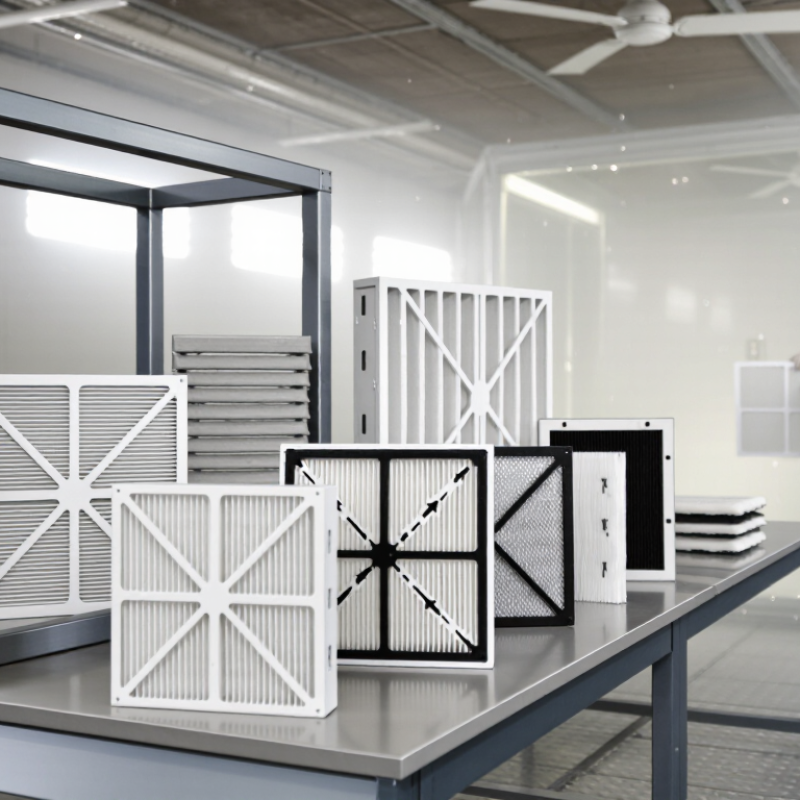
Booth filters are replaceable media used inside spray, painting, and finishing booths. They capture overspray, dust, fibers, and other airborne particles before they reach workers, products, or exhaust equipment. Common types include intake filters, floor filters, exhaust filters, pocket filters, and activated-carbon sections. Each type handles a different stage of air movement. Choosing only by price can create problems. A filter may fit the frame but restrict airflow, increase energy use, or reduce coating quality.
Global buyers need booth filters that match local equipment, operating conditions, and maintenance practices. Dimensions, filtration efficiency, pressure drop, fire performance, and replacement intervals should appear in clear technical documents. Reliable suppliers can provide test data, material details, batch information, and packing specifications. These details matter during international shipping. Humidity and compression can damage filter media if packaging is weak. A clean-looking filter may already be overloaded. That is easy to miss. It is also worth checking whether the supplier understands your coating process, airflow volume, and dust load. One standard filter cannot suit every booth.
Tips: Measure the frame, airflow direction, and filter depth before ordering. Request a sample when possible. Compare pressure-drop data, not just capture efficiency. Keep spare filters in sealed, dry storage. Record replacement dates and visible loading. Inspect seals carefully; small gaps can bypass the filter. I once underestimated this detail, and the booth stayed cleaner than expected, but the surrounding area did not. That result deserves a second check, not confidence.
| Filter Type | Primary Function | Typical Booth Application | Common Filter Media | Typical Performance Reference | Main Selection Advantage | Replacement or Maintenance Signal | Global Buying Considerations |
|---|---|---|---|---|---|---|---|
| Paint Arrestor Filter | Captures overspray particles before they enter the exhaust duct or fan. | Wet-paint spray booths and finishing booths. | Fiberglass, polyester, paperboard, or multilayer synthetic media. | Particle capture depends on media construction, airflow, coating type, and loading level. | High overspray capacity | Visible color loading, increased pressure drop, reduced airflow, or poor finish quality. | Confirm media thickness, roll or panel dimensions, airflow direction, and compatibility with the coating process. |
| Pocket or Bag Filter | Removes suspended dust from supply or exhaust air while providing a relatively large filtration area. | Industrial spray booths, preparation areas, and air-handling systems. | Synthetic or glass-fiber pocket media supported by a rigid frame. | Often classified by ISO 16890 ePM efficiency groups; the exact class depends on the tested product. | Longer service potential | Rising differential pressure, visible dust bypass, damaged pockets, or reduced air volume. | Verify pocket count, pocket depth, frame size, gasket position, and the local test standard used in procurement documents. |
| Panel Prefilter | Protects downstream filters and removes larger dust, fibers, and debris. | Ventilation units, booth air inlets, and multistage filtration systems. | Pleated synthetic media, fiberglass, foam, or spun-bonded polyester. | Usually selected as a coarse or general-purpose stage under ISO 16890 classification. | Low purchase cost | Dust loading, darkened media, increased pressure drop, or visible damage. | Check nominal versus actual dimensions, frame material, pleat direction, holding clips, and carton compression during shipping. |
| High-Efficiency Fine Filter | Removes fine airborne particles to improve cleanliness of booth supply air. | Clean finishing zones, precision coating areas, and controlled production booths. | Fine synthetic media or microglass fiber in a rigid or compact frame. | Efficiency should be compared using a recognized test method, such as ISO 16890 or an applicable regional standard. | Cleaner supply air | Pressure drop reaches the system limit, airflow falls, or filter integrity is compromised. | Request test reports, initial pressure-drop data, operating temperature limits, and the required installation orientation. |
| HEPA Filter | Provides very high efficiency for fine particulate control when correctly installed and tested. | Specialized clean booths, pharmaceutical areas, electronics work zones, and critical final air stages. | Microglass fiber media with separators or a separatorless mini-pleat design. | HEPA performance is commonly specified using EN 1822 or ISO 29463 classifications, such as H13 or H14. | Very high particle control | Pressure drop exceeds the operating limit, leakage is detected, or the filter fails an integrity test. | Confirm the class, test aerosol method, scan-test or leak-test requirement, gasket type, and certification documents. |
| Activated Carbon Filter | Adsorbs selected gases, vapors, and odors; it does not replace a particle filter. | Odor-control booths, solvent-related processes, and exhaust treatment systems. | Granular activated carbon, carbon-impregnated media, or carbon panels. | Performance varies with carbon type, bed depth, contaminant concentration, humidity, temperature, and contact time. | Odor and vapor control | Odor breakthrough, contaminant breakthrough, excessive pressure drop, or a process change. | Identify target chemicals, safety data requirements, carbon loading, transport classification, and disposal obligations before purchase. |
| Ceiling Supply Filter | Distributes and filters incoming air to support a more uniform airflow pattern across the booth. | Automotive, industrial, and other downdraft or crossdraft spray booths. | Progressive-density synthetic media, fiberglass, or high-efficiency pleated media. | Selection depends on required cleanliness, face velocity, airflow volume, and allowable pressure drop. | Uniform booth airflow | Uneven spray finish, dust contamination, rising pressure drop, or visible media loading. | Measure the full ceiling module, support grid, sealing method, airflow direction, and access requirements for replacement. |
| Floor or Exhaust Filter | Captures overspray and particulate matter carried toward the booth floor or exhaust path. | Downdraft booths, paint collection floors, and exhaust plenum sections. | Fiberglass, polyester, multilayer synthetic, or rigid-panel media. | Capture performance depends on the process, airflow velocity, filter depth, and loading capacity. | Protects exhaust equipment | Visible saturation, airflow restriction, overspray carryover, or increased fan energy demand. | Confirm load-bearing support, moisture resistance, fire-related requirements, cutting tolerance, and disposal rules. |
Booth filters guide air around workers, products, and finishing surfaces. Stable airflow reduces dust and surface defects. Poor airflow can cause uneven curing.
Pre-filters capture larger particles. Fine filters remove lint and smaller dust. Layered filtration protects coated surfaces and reduces rework.
These booths need spark-resistant stages and durable dust collection. Filters should handle heavy metal particles without blocking extraction points. Small leaks matter.
Inspect pressure readings, filter seals, and visible dust trails. A simple pressure gauge can reveal problems early. Record unusual changes.
Staged filtration captures fibers, chips, and fine dust. This design extends filter life and keeps suction more consistent. Air can still restrict quickly.
Use fine filtration and sealed housings. Review airflow tests, particle-capture data, gasket quality, and replacement procedures. Sealing deserves careful attention.
Review both measurements together. High efficiency means little if airflow becomes weak. A dense filter may increase fan energy use.
Request test reports, material details, expected service life, and replacement procedures. Confirm filter size, airflow, temperature range, and gasket fit. Keep specifications written.
Humid warehouses may need moisture-resistant media. Dusty areas may require stronger pre-filtration. Dry test results may not predict humid production performance.
Request a sample before a large order. Measure the frame, gasket, and airflow carefully. Compare similar test conditions and review packaging details. A small trial can expose slow communication or incomplete records.
Booth Filters are essential components for maintaining clean, safe, and efficient working environments in spray booths, painting areas, and other industrial spaces. They capture paint particles, dust, overspray, and airborne contaminants before these materials spread through equipment or the surrounding facility. Global buyers can choose from several options, including intake filters, exhaust filters, panel filters, pocket filters, and specialized high-efficiency media. Each type is designed for different airflow conditions, contaminant levels, and application requirements.
Before purchasing, buyers should evaluate filtration efficiency, airflow resistance, dust-holding capacity, filter dimensions, service life, and compatibility with existing booth systems. The right Booth Filters can improve finish quality, reduce maintenance, and support stable production. Buyers should also compare total cost rather than focusing only on the initial price, considering replacement frequency, energy consumption, and disposal needs. Reliable suppliers should provide clear technical specifications, consistent quality, responsive communication, and dependable delivery support across international markets.

 LJF Air FILTER